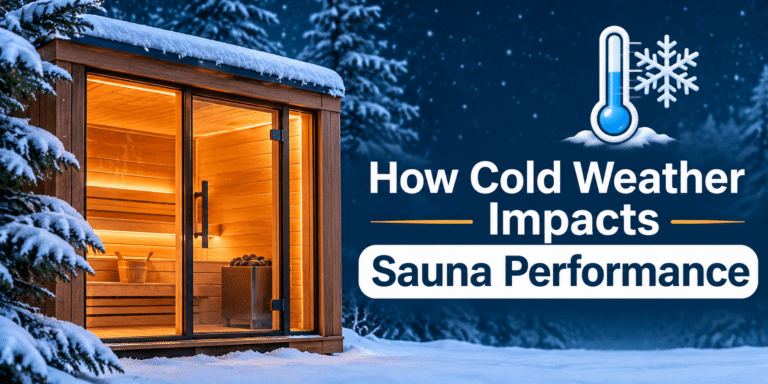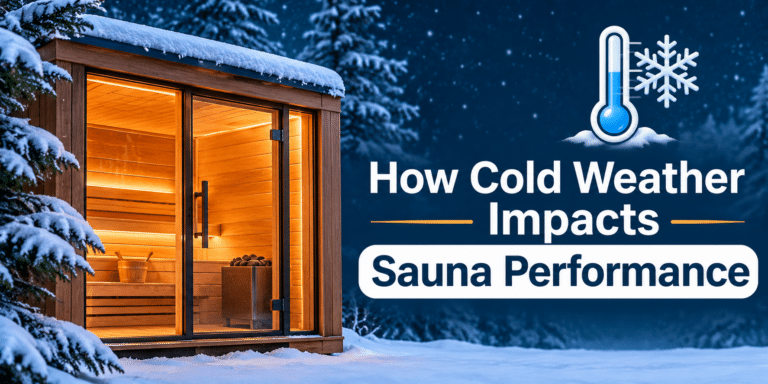
Cold weather can make a sauna session especially appealing, but winter conditions also affect how an outdoor sauna heats up, retains warmth, and uses energy. Low temperatures, strong winds, snow, and moisture place additional demands on the structure and heating system. Understanding these effects helps sauna owners prepare their equipment, maintain comfortable temperatures, and protect their investment throughout the colder months.
An outdoor sauna can work reliably in winter with suitable insulation, proper ventilation, and a heater designed for the space. Regular inspections and a few seasonal adjustments can also help prevent heat loss and unnecessary wear. For homeowners planning to use their sauna year-round, knowing how cold weather affects performance is an important part of keeping every session comfortable and efficient.
How Does Cold Weather Affect Sauna Performance?
Cold outdoor temperatures create a larger difference between the air inside the sauna and the surrounding environment. The heater must work to overcome that difference, especially when the structure has poor insulation or allows drafts around doors and windows.
Several factors influence winter performance, from the sauna’s construction to the condition of its heating equipment.
Longer Heating Times
A sauna generally takes longer to reach its target temperature when the outdoor air is freezing. The heater must warm the interior air, benches, walls, and other surfaces before the space feels comfortable. A cold sauna that has not been used for several days may need additional time to heat fully.
Greater Heat Loss
Heat escapes through walls, ceilings, floors, windows, and gaps around doors. Wind can increase heat loss around poorly sealed areas, while thin insulation makes it harder to maintain a stable temperature. A well-built sauna reduces these problems and helps the heater maintain consistent warmth.
Increased Energy Consumption
When heat escapes quickly, the heater may need to run longer to maintain the desired temperature. This can increase electricity consumption during winter, particularly with frequent use or extended heating sessions. Good insulation and an appropriately sized heater help limit unnecessary energy use.
Changes in Interior Comfort
A sauna thermometer may show the desired temperature before every surface has warmed evenly. Cold benches, chilly floor areas, or drafts near the entrance can make the first part of a session less comfortable. Allowing adequate preheating time helps create a more consistent environment.
How to Maintain Sauna Temperature in Winter?
Keeping a sauna warm during freezing weather starts with controlling heat loss and giving the heater enough time to do its job. A few practical adjustments can improve comfort without putting unnecessary strain on the equipment.
Allow Enough Time for Preheating
Start the heater early enough to warm the air, stones, and interior surfaces before entering. Winter preheating times vary with outdoor temperature, sauna size, insulation, and heater capacity. Follow the manufacturer’s instructions rather than relying on a fixed heating time.
Keep Doors and Windows Closed
Opening the sauna door releases warm air and allows cold air to enter. Keep the door closed during heating and sessions, and check its seal if you notice persistent drafts. Avoid leaving windows open unless the manufacturer’s instructions specifically call for it.
Check the Heater and Sauna Stones
A heater cannot distribute warmth properly if its stones are tightly packed, crumbling, or arranged incorrectly. Inspect the stones according to the manufacturer’s maintenance schedule, replacing damaged ones and arranging the remaining stones to allow airflow. Always switch off the heater and let it cool before handling stones.
Use the Correct Heater Settings
Choose a heater rated for the sauna’s size and construction. An undersized unit may struggle in severe cold, while an oversized heater can create uneven heating if it is poorly matched to the room. If the heater repeatedly shuts off or fails to warm the sauna, consult the manual or a qualified technician.
Temperature monitoring also deserves attention when selecting a sauna. A 2025 experimental study published in the Journal of Applied Physiology found a difference between the factory thermostat reading and an independently measured temperature in a far-infrared sauna. The thermostat averaged 57°C, while the separate probe recorded 43°C. Although this finding relates to one experimental setup, it highlights the importance of sensor placement and reliable temperature monitoring.
How to Insulate an Outdoor Sauna?
Insulation helps slow heat transfer from the warm interior to the cold outdoors. It can improve winter comfort and reduce the time the heater needs to maintain the target temperature. The right approach depends on the sauna’s design, materials, and heating system.
Insulate Walls and Ceiling Properly
Use insulation approved for the sauna’s construction and operating temperatures. The ceiling deserves particular attention because warm air rises, and poorly insulated upper surfaces can allow substantial heat loss. Follow the sauna manufacturer’s recommended wall and ceiling assembly.
Seal Gaps without Blocking Ventilation
Check around doors, windows, and exterior joints for gaps that allow cold air to enter. Repair damaged seals with suitable materials, but do not seal intentional ventilation openings. Saunas need properly designed airflow to support safe heater operation and a comfortable environment.
Protect the Floor and Foundation
A cold or poorly insulated floor can make the sauna feel uncomfortable even when the air is hot. A stable, level base and appropriate floor construction help limit heat loss and protect the structure from moisture. Follow the model’s installation requirements, especially in areas that experience snow and freezing ground.
Choose Weather-Resistant Materials
Outdoor saunas face rain, snow, sunlight, and repeated temperature changes. Inspect exterior cladding, roof coverings, flashing, and drainage to identify damage before moisture reaches the interior structure. Repairs should use materials suitable for outdoor exposure and the sauna’s specific design.
Make winter sauna sessions more comfortable with Finnleo saunas available through Colorado Springs Hot Tubs. Get expert guidance on choosing a sauna with reliable heating, quality construction, and features suited to cold-weather use. Contact our team today to find the right option for your home.
Do Outdoor Saunas Work in Winter?
Yes, many outdoor saunas can operate in winter when they are designed for cold-weather use and installed correctly. Performance depends on insulation, heater capacity, ventilation, construction quality, and the severity of local conditions. A well-insulated sauna with a suitable heater can maintain a comfortable interior even when temperatures outside are below freezing.
| Winter Condition | Possible Effect | Practical Response |
| Freezing temperatures | Longer heating time | Allow extra preheating |
| Strong winds | Greater heat loss | Check seals and wind exposure |
| Snow and ice | Restricted access or exterior damage | Clear access and inspect the roof |
| Poor insulation | Uneven or unstable temperatures | Review insulation and construction |
| Cold-sensitive heater controls | Heater may fail to start | Check the manual and contact the manufacturer |
The table outlines common possibilities, not guaranteed outcomes. Heater design and the manufacturer’s operating instructions determine how a specific sauna behaves in cold weather.
Winter Maintenance That Supports Better Performance
Cold weather makes regular inspections particularly important. Snow, moisture, and freezing temperatures can affect exterior materials and some heater components, so seasonal care should be part of the ownership routine.
Remove Snow from Access Areas
Keep pathways and entrances clear so the sauna remains accessible. Remove snow from the roof only when necessary and in line with the manufacturer’s instructions. Avoid tools or methods that could damage roofing materials or exterior panels.
Inspect Electrical Connections and Controls
Electric sauna heaters require correctly installed electrical systems and functioning temperature controls. If a heater trips, displays an error, or stops heating in cold weather, consult the manual and contact a qualified technician. Never bypass safety controls or attempt electrical repairs without proper qualifications.
Dry the Interior After Use
Moisture can collect on benches and other wooden surfaces during regular use. Follow the manufacturer’s drying and ventilation instructions after each session. In freezing conditions, avoid leaving exterior vents or windows open in ways that introduce excessive cold air or create other problems for the structure.
Monitor Energy Use
Longer heating periods can increase winter energy consumption. Keeping the door closed, maintaining the insulation, and avoiding unnecessary reheating can help. A correctly sized heater and well-maintained stones also support efficient heat distribution.
Frequently Asked Questions
-
Can You Use a Sauna In Freezing Temperatures?
Yes, you can use a sauna in freezing temperatures if the model and heater are approved for those conditions and installed correctly. Allow sufficient preheating time, follow the manufacturer’s instructions, and check that all equipment operates normally.
-
How Long Does a Sauna Take to Heat in Winter?
Heating time depends on the sauna’s size, insulation, heater capacity, and outdoor temperature. Cold conditions generally require more preheating time, so follow the manufacturer’s recommendations.
-
Does a Sauna Need Extra Insulation for Winter?
Not always. Some outdoor models are designed for year-round use, while others may require additional insulation or weather protection. Check the manufacturer’s specifications before making modifications.
-
How Can Sauna Heat Loss Be Reduced in Winter?
Maintain door seals, insulate the walls and ceiling as specified, keep the door closed during sessions, and inspect the exterior for gaps or damage. Never block ventilation openings designed for safe operation.
Conclusion
Cold weather can increase sauna heating time, energy use, and heat loss, but these challenges can often be managed with proper construction and consistent care. Suitable insulation, a compatible heater, good ventilation, and routine inspections help maintain comfortable temperatures and reliable performance throughout winter. Following manufacturer guidance also protects the equipment and supports safe, efficient operation.
Get your sauna ready for colder weather with Colorado Springs Hot Tubs. We also feature a wide range of energy-efficient hot tubs to help you create a comfortable, inviting wellness space at home throughout winter.