Your skin is a built-in alarm system, and it screams when water gets too hot. Neuropathy can turn that alarm down to a whisper. A soak that feels warm to your numb feet may be hotter than it seems, and that gap is where burns hide.
Understanding the connection between hot tubs and peripheral neuropathy helps you enjoy warm water without paying a painful price. Temperature is the star of this story, so we’ll cover how nerves sense heat, which numbers keep you safe, how to prepare before every soak, and when to call your doctor. Let’s make your next soak calm.
Understanding Neuropathy and Hot Water Sensitivity
Hot tub use requires extra caution for people with nerve pain, as reduced sensation can make it harder to recognize excessive heat.
How Nerves Sense Heat
Tiny nerve endings in your skin detect warmth and send signals through your nervous system. These signals help you recognize heat and respond to potentially harmful conditions. With healthy nerves, this process helps you react quickly. Peripheral neuropathy, which affects nerves outside the brain and spinal cord, can weaken these signals.
When Pain Warnings Fade
For people with nerve damage, safe water temperature matters most when their feet cannot warn them about excessive heat. Diabetes is a common cause of reduced sensation, but it is not the only one. With less feeling, you could stay in hot water for a long time and notice nothing. Warm water can feel soothing, so time can slip by unnoticed.
Why Burns Can Go Unnoticed
Burns can develop before your brain registers pain. Numb skin may not detect water that is hot enough to cause injury. Redness or blistering after a soak should be taken seriously, so inspect your feet every time. Older adults may also need extra precautions around hot water.
Setting the Right Hot Tub Temperature for Neuropathy
A few numbers and habits can make warm water much safer.
Know the 104°F Ceiling.
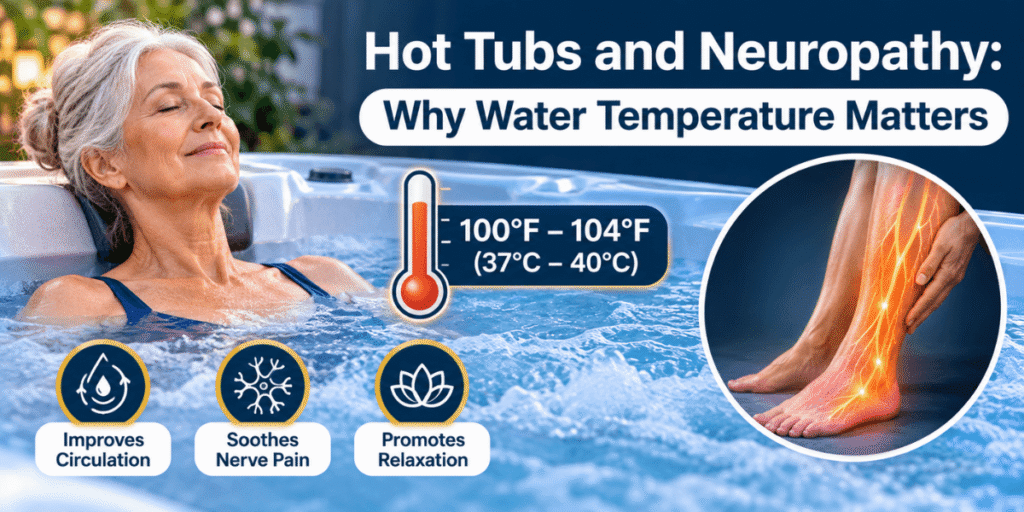
According to the Consumer Product Safety Commission, hot tub temperatures should never exceed 104°F. This is a maximum, not a guarantee of safety for everyone. Check the water temperature before each soak. If you have reduced sensation, consult your doctor about appropriate temperatures, as you may not notice burns.
Leave Room for a Safety Cushion
People with reduced sensation may not recognize when water is hot enough to cause burns. Check the water with an accurate thermometer, avoid prolonged exposure, and consult a healthcare professional about precautions suited to your condition.
Keep Sessions Short
Shorter sessions limit how long your skin is exposed to heat, but they don’t eliminate burn risk. Follow your healthcare professional’s advice about soaking duration. Drink water, and leave the tub immediately if you feel dizzy or overheated.
Enter and Exit Slowly
Enter slowly and take care when leaving the tub. Heat can widen blood vessels and contribute to lightheadedness, increasing fall risk. Use steady footing, hold a secure handrail when available, and ask someone nearby for assistance if needed. Take your time.
Warm water is a recipe, and the right heat is the key ingredient. Colorado Springs Hot Tubs has the tubs to match, with new and refurbished options on the showroom floor. Connect with us today and read our guide “Ideal Temperature for a Hot Tub” to get your recipe just right!
Common Hot Tub Risks and Safer Habits
Understanding potential risks can help people with neuropathy take precautions before, during, and after a soak.
| Potential Risk | Safer Habit |
| Unnoticed burns | Ask someone else to check the water temperature. |
| Skin irritation | Inspect your skin before and after soaking. |
| Dizziness or overheating | Leave the tub promptly if you feel unwell. |
| Slips and falls | Use secure footing and enter or exit slowly. |
| Worsening symptoms | Discuss changes in sensation or pain with your doctor. |
| Infection concerns | Avoid soaking with open wounds and seek medical advice about skin injuries. |
Myths About Hot Tubs and Neuropathy
A few common beliefs can put numb skin at risk.
- Myth: “If it feels fine, it is safe.” Numb skin can feel gentle warmth even when heat is already causing harm, so the number matters more than how it feels.
- Myth: “Hotter water works better.” CPSC guidance says hot-tub water should not exceed 104°F. Lower temperatures reduce heat exposure, but people with reduced sensation should seek medical advice before soaking.
- Myth: “My feet can test the water.” Reduced sensation makes your feet poor judges, so ask someone with normal sensation to check.
- Myth: “Longer soaks bring more relief.” Extended soaking can increase exposure to heat and the risk of dizziness. Follow medical advice about session duration, and leave the tub immediately if you feel unwell or overheated.
- Myth: “Only people with diabetes need to worry.” Diabetes is a common cause, but other conditions can also reduce feeling in the feet.
- Myth: “No pain means no burn.” Burns can form before pain registers, so check your skin for redness or blisters after every soak.
Frequently Asked Questions
1. Can People with Neuropathy Safely Use a Hot Tub?
People with neuropathy may use hot tubs with medical approval. Reduced sensation increases burn risks, so check the water with a thermometer and follow your doctor’s advice. Safety depends on your nerve function, circulation, and skin condition.
2. Why is Water Temperature Important for People with Neuropathy?
Reduced feeling means your body may not sound the alarm when water gets too hot. Skin can burn before you notice pain, so temperature becomes your main protection. A steady, moderate setting keeps you safer.
3. What is the Safest Hot Tub Temperature for Someone with Reduced Sensation?
The best hot tub temperature for neuropathy is the one your doctor approves, and it should never exceed 104°F. People with altered sensation may need a lower setting to reduce the risk of burns.
4. Can Hot Water Worsen Neuropathy Symptoms?
Overheated water can injure numb skin, and that harm may add pain or new problems. Neuropathy and sensitivity to hot water look different for everyone, so track how your body reacts and share changes with your doctor.
5. How Can You Prevent Burns When Using a Hot Tub with Neuropathy?
Keep the temperature at or below 104°F, use an accurate thermometer, and follow your doctor’s advice about soaking. Check your skin afterward for redness or blisters. Never rely on your feet alone to judge water temperature, and don’t assume a short soak eliminates burn risk.
Conclusion
A safe water temperature for nerve damage protects you when your feet cannot. Keep the heat at or below 104°F, ask your doctor for a personal number, and let someone with normal feelings check the water. Short soaks, slow steps, and a quick skin check afterward complete the plan. Warm water can still be a real pleasure when you respect it. You deserve comfort, and safety makes comfort last.
Careful temperature habits open the door to safer, steadier wellness routines. Colorado Springs Hot Tubs is here to help local families find their own way to a better routine. Browse through our collection of swim spas in Colorado Springs today and let your next chapter of comfort begin!