
Snow piles up against the fence line, the air turns sharp enough to sting, and somehow the water in the tub stays exactly as warm as it was in July. That contrast is most of the appeal. Steam curls off the surface while frost creeps along the deck railing, and for a while, none of it matters.
Plenty of owners assume a hot tub is a summer amenity that goes quiet once the first frost hits. Still, with the right setup, hot tubs in winter can be one of the best reasons to step outside, turning the coldest months into some of the most rewarding for actually using the backyard.
Why Winter Soaking Is Worth the Extra Effort
Running a hot tub in winter months can mean higher heating costs because the spa has to maintain its water temperature while outdoor temperatures are lower. Proper circulation and freeze protection are also important in cold weather. Warm-water soaking can feel relaxing and may help ease muscle discomfort.
There’s also a social side worth mentioning. A hot tub gives family members a reason to unwind together away from screens and daily distractions, something that matters just as much in January as it does in July.
Choosing Equipment That Can Handle the Cold
Not every spa is built the same way, and that matters more once temperatures drop. Getting the equipment right from the start makes everything else in this guide easier.
Well-Insulated Construction
A well-insulated spa can help reduce heat loss during cold weather. Insulation design varies by manufacturer and model, so check the specifications and energy-efficiency information before choosing a spa for winter use.
Cover Density and Fit
A dense, properly fitted cover matters just as much as the tub itself. A properly fitted, well-insulated cover helps reduce heat loss. A cracked or thinning cover can compromise its performance and allow heat to escape.
A Floating Thermal Blanket
A floating thermal blanket can provide an additional barrier between the water and the air above it. If you use one, choose a product designed for hot-tub use and follow the manufacturer’s instructions.
Knowing When to Replace a Worn Cover
A cover that’s cracked, brittle, or waterlogged is no longer doing its job, even if it still technically closes. Replacing it at the first sign of wear rather than waiting for a full failure keeps the whole insulation system working as intended.
Catching Small Problems Before They Become Big Ones
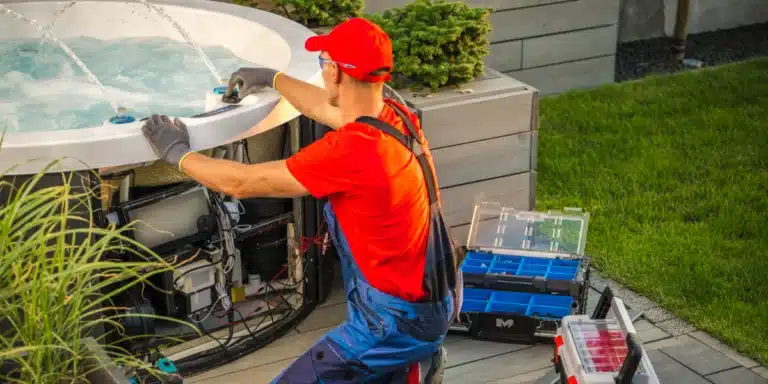
A slow leak that goes unnoticed in warmer months can become a bigger problem once temperatures drop, since water left around fittings or components can freeze and cause damage. Walking the perimeter of the tub and checking connections before freezing temperatures arrive can help you identify problems while they’re still easier to address.
Pipes and pumps deserve the same attention. A system that isn’t circulating properly can be more vulnerable to freeze damage in cold weather, so confirming everything flows smoothly before relying on the tub through the coldest stretch of the year is a sensible precaution.
Keeping a Hot Tub Outside in Winter Running Smoothly
Regular maintenance doesn’t pause just because it’s cold outside. A handful of habits keep the whole system running without surprises:
- Clean the shell and replace the water according to the manufacturer’s recommended schedule
- Keep the cover securely closed whenever the spa is not in use to help retain heat
- Keep the spa operating according to the manufacturer’s recommended settings and make sure its freeze-protection system is functioning properly.
- Test water chemistry regularly and keep pH and sanitizer levels within the manufacturer’s recommended range.
Not sure your current setup can handle a Colorado Springs winter? Colorado Springs Hot Tubs carries the Caldera Utopia hot tub line, which uses fully insulated FiberCor® construction designed to support energy efficiency, and our team can walk you through which model fits your backyard.
Making a Hot Tub in the Snow Comfortable To Use
Stepping from warm water into freezing air is the least pleasant part of a winter soak, so a little planning around the tub goes a long way. Windbreaks, privacy screens, or evergreen landscaping can create a more sheltered area around the tub, and a heat lamp nearby closes the gap between the water and the outside air. A rug or mat next to the steps keeps bare feet off frozen concrete or decking, which sounds minor until you’ve forgotten one.
Keep your soak comfortable and avoid staying in excessively hot water for prolonged periods. Drink water before and after your session, and get out if you feel dizzy, lightheaded, nauseated or unwell. The CDC also advises against drinking alcohol before or during hot-tub use.
Deciding Whether to Use or Winterize the Hot Tub
Some owners choose to shut the spa down entirely rather than run it through the coldest months. If you’d rather shut the spa down for the season, our full winterizing checklist walks through draining, sealing, and protecting the plumbing step by step. A tub sitting unused all winter still deserves an occasional check-in, since a slipped cover or a failed seal can go unnoticed for weeks when nobody’s stepping outside to use it.
A Simple Way to Track Winter Care
Here’s the whole winter routine condensed into one table worth bookmarking. Keeping to this rhythm is usually enough to avoid any cold-weather surprises.
| Task | When To Do It | Why It Matters |
| Deep clean and water change | According to the manufacturer’s recommended schedule | Supports consistent water quality throughout winter |
| Leak and seal inspection | Before freezing temperatures arrive | Helps identify leaks or other problems before cold weather sets in |
| Cover and thermal blanket check | Regularly through winter | Helps maintain insulation and reduce heat loss |
| Freeze-protection check | Before and during winter | Confirms the spa is operating according to the manufacturer’s cold-weather requirements |
| Water chemistry testing | Regularly throughout winter | Helps maintain appropriate sanitizer and pH levels |
Frequently Asked Questions
1. Is it safe to go straight from a hot tub into the snow?
Moving between hot water and cold outdoor air can be uncomfortable, especially in windy or icy conditions. Keep the area around the spa clear, use a non-slip mat where needed, and have a towel or warm clothing ready nearby.
2. How Long Should You Stay in a Hot Tub During Winter?
Keep soaks moderate rather than extended, and get out of the hot tub if you feel dizzy or lightheaded, nauseated or unwell. The CDC also advises against drinking alcohol before or during hot-tub use.
3. What’s a comfortable water temperature for hot tubbing in the snow?
The CDC recommends keeping hot-tub water at or below 104°F. The most comfortable setting below that maximum varies by user and spa, so follow the manufacturer’s guidance and consider individual health needs.
4. Will cold weather affect my water chemistry?
Winter does not remove the need for regular water testing and maintenance. Test the water according to your spa manufacturer’s recommendations and keep sanitizer and pH levels within the appropriate range.
5. Can I use my hot tub every day in winter?
There is no universal winter-use schedule for every hot-tub owner. Follow your spa manufacturer’s operating guidance, keep the water within the recommended temperature range, and leave the tub if you feel dizzy, lightheaded, nauseated or unwell.
Final Thoughts
A Colorado Springs winter doesn’t have to mean a covered, unused hot tub sitting in the backyard. With the right insulation, a secure cover, regular leak checks, and a few adjusted habits around soak time and hydration, a spa can turn into one of the more enjoyable parts of the season rather than a maintenance headache.
If your current tub is struggling to keep up with the cold, Colorado Springs Hot Tubs is a caldera spa hot tub dealer serving the area, and our team can help you find a model built to handle everything a Colorado winter brings.