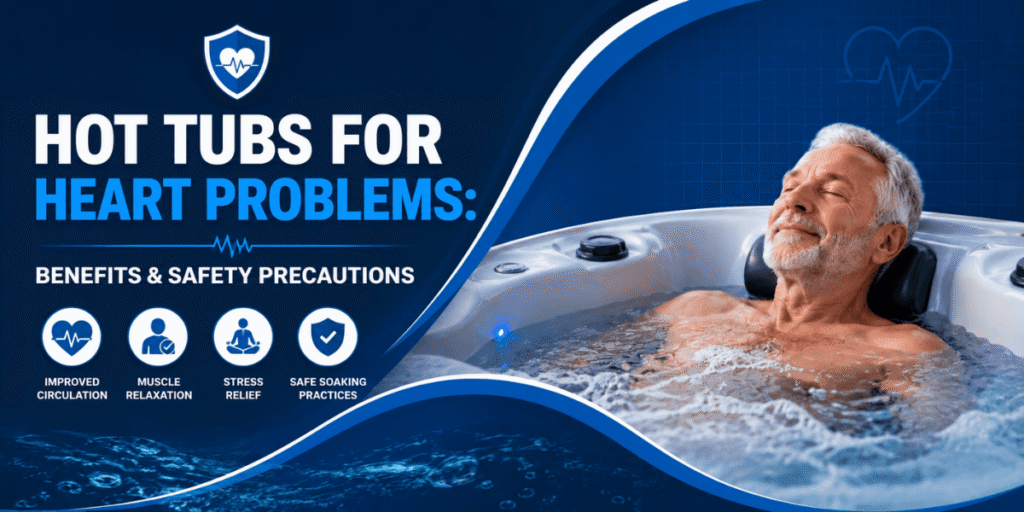
After a long day, a hot tub can offer welcome relaxation, soothing sore muscles and releasing built-up tension. That same warmth also sets off a chain reaction inside the chest, one most soakers never think twice about. Understanding the cardiovascular effects of hot tubs matters more for some people than others, especially anyone managing heart disease, high blood pressure, or a recent cardiac event.
Hot water immersion isn’t automatically off-limits for a healthy heart or a treated one. Still, people with cardiovascular conditions should use caution and talk with a healthcare provider before soaking. This guide looks at what happens to the heart in hot water, who should be careful, and how to soak safely.
What Research Says About Hot Tubs and Heart Disease
Findings published through the National Institutes of Health (NIH) indicate that hot water immersion can increase heart rate while lowering diastolic and mean arterial blood pressure as blood vessels widen in response to heat. These cardiovascular effects are relevant when considering hot-tub use in people with cardiovascular conditions, although evidence in clinical populations is more limited.
How Body Temperature Rises During a Soak
Hot water immersion can raise core body temperature as the body absorbs heat from the surrounding water. In response, blood flow to the skin increases, helping the body release excess heat and regulate its temperature.
Why Blood Pressure Drops in Warm Water
As blood vessels widen in response to heat, vascular resistance decreases, which can lower blood pressure. The body adjusts by increasing heart rate to help maintain adequate blood flow. These cardiovascular responses are part of the body’s normal reaction to heat during hot water immersion.
How the Heart Rate Responds to Compensate
When blood pressure falls, the heart can beat faster to help maintain blood flow to the brain and other organs. This response is part of the body’s adjustment to heat. A healthy heart generally handles these changes well, but existing cardiovascular disease can make the response more concerning.
Is a Hot Tub Safe for Heart Patients?
Some people with stable coronary artery disease may tolerate brief hot-tub sessions, but the evidence is limited.
Stable Coronary Artery Disease
People with stable, well-managed coronary artery disease may tolerate short hot-tub sessions, but individual medical advice still matters. Mayo Clinic research found lower heart rates and blood pressure during a 15-minute hot-tub session than during cycling in 15 men with clinically stable coronary artery disease. Stable does not mean unmonitored, and a doctor’s input still matters.
Heart Failure and Irregular Heartbeats
Heart failure can affect how the heart responds to heat and blood pressure changes. Increased heart rate and circulation changes may add stress to the cardiovascular system. People with heart failure or irregular heart rhythms should seek medical guidance before soaking in a hot tub.
Recent Heart Attack or Heart Surgery
A recent heart attack, bypass surgery, or other cardiac procedure calls for medical guidance before using a hot tub. The appropriate timing depends on the person’s recovery and overall cardiovascular health. Direct approval from a healthcare provider can help determine when soaking is appropriate.
High Blood Pressure That Is Under Control
People being treated for high blood pressure should discuss hot-tub use with their healthcare provider, even when their blood pressure is controlled. Hot water can temporarily lower blood pressure, and prolonged soaking may increase the risk of dizziness or fainting. Poorly controlled or naturally low blood pressure calls for extra caution.
Hot Tub Safety for Heart Conditions: Steps to Follow
A few simple habits can help make a relaxing soak safer for anyone managing a heart condition.
1. Get Medical Clearance First
If you have heart disease, discuss hot tub use with your cardiologist or healthcare provider beforehand. This is especially important after a cardiac event or if you have uncontrolled blood pressure, reduced heart function, or abnormal rhythms. Personalized guidance can help you determine if hot-tub use is appropriate.
2. Keep the Water Temperature Moderate
High water temperatures can increase cardiovascular strain, particularly for people with heart conditions. Hot tubs commonly operate around 100°F to 104°F, but no single temperature is appropriate for everyone with cardiovascular disease. Follow your healthcare provider’s recommendation for your specific condition.
3. Limit Time in the Water
Most experts recommend limiting hot-tub exposure to about 5 to 10 minutes for people with heart conditions. Longer exposure increases the duration of heat-related cardiovascular changes and may increase the risk of dizziness or other symptoms. Setting a timer removes the guesswork once you start to relax.
4. Stay Hydrated Before and After
Hot water can contribute to fluid loss, making hydration an important precaution during a soak. Heat exposure can contribute to fluid loss. Keep water nearby unless your healthcare provider has given you fluid restrictions, and follow their specific guidance about hydration.
5. Avoid Soaking Alone
Heart-related symptoms can develop while someone is already in warm water. Having another person nearby can provide an extra layer of safety if dizziness, chest discomfort, nausea, shortness of breath, or an abnormal heart rhythm develops.
Learn more about the essential hot tub safety tips by reading our blog and approach hot-water immersion with greater awareness of its effects on circulation. Colorado Springs Hot Tubs can help you explore spa options designed for comfortable home use. Get in touch today for assistance finding a hot tub that suits your home!
Hot Tub Safety Guidelines at a Glance
Research on hot tubs and heart disease points to a few consistent precautions worth keeping in mind.
| Factors | General Guideline | Why It Matters |
| Water Temperature | 100 to 104°F; follow your healthcare provider’s recommendation if you have a cardiovascular condition | Higher heat increases the cardiovascular response to heat |
| Session Length | 5 to 10 minutes for heart patients | Limits prolonged exposure to heat and cardiovascular changes |
| Hydration | Water before, during, and after | Helps reduce the risk of dehydration during a hot soak |
| Medical Clearance | Before first use | Helps determine whether hot-water exposure is appropriate |
| Company | Never soak alone | Provides additional safety if symptoms develop |
Cardiovascular Effects of Hot Tubs You Should Know
Beyond blood pressure and heart rate, hot water immersion redirects blood flow toward the skin as blood vessels widen to help release heat. A healthy cardiovascular system generally manages these changes, though existing heart disease can make the response more concerning.
Regular hot bathing has also been associated with lower cardiovascular risks. A study published in the journal Heart tracked bathing habits and found that daily warm or hot baths were tied to a 28% drop in cardiovascular disease risk and a 26% drop in stroke risk compared with people who bathed twice a week or less. However, the study was observational, so these figures show an association rather than proving that hot bathing prevents cardiovascular disease or stroke.
Frequently Asked Questions
-
How Does Hot Tub Heat Affect Blood Pressure And Heart Rate?
Hot water widens blood vessels, which can lower blood pressure while increasing heart rate. These effects vary by person and typically ease as the body cools after leaving the tub.
-
Is It Safe To Use A Hot Tub If I Have Had A Heart Attack Or Bypass Surgery?
If you’ve recently had a heart attack or bypass surgery, get your doctor’s guidance before using a hot tub. Safe timing depends on your recovery and cardiovascular health.
-
What Is The Maximum Time A Person With A Heart Condition Should Stay In A Hot Tub?
People with heart conditions should generally keep hot-tub sessions brief, with 5–10 minutes often recommended. Longer exposure may increase the risk of dizziness and other heat-related symptoms.
-
What Temperature Setting Is Safest For Someone With Cardiovascular Issues?
There is no universal safe temperature for people with cardiovascular conditions. Ask your healthcare provider about the appropriate temperature for your specific condition.
-
What Warning Signs Indicate You Should Immediately Exit The Hot Tub?
Leave the hot tub if you experience dizziness, chest discomfort, shortness of breath, nausea, or an unusual or racing heartbeat. Seek medical attention for concerning or persistent symptoms.
Final Thoughts
Hot tubs bring real relaxation and, for many people, genuine cardiovascular benefits. Good hot tub safety habits for heart conditions rest on the specific condition, the water temperature, and how closely a doctor stays involved.
A short soak, a moderate temperature, and a companion nearby can make hot-tub use a more cautious choice for someone with a heart condition. Checking with a doctor before the first session remains the single most important step for anyone managing a cardiovascular condition.
Every precaution mentioned above starts with knowing how long you should stay in a hot tub based on your individual needs. Go through our detailed guide to learn more. Moreover, Colorado Springs Hot Tubs can help you choose a hot tub that fits your preferences, lifestyle, and home.