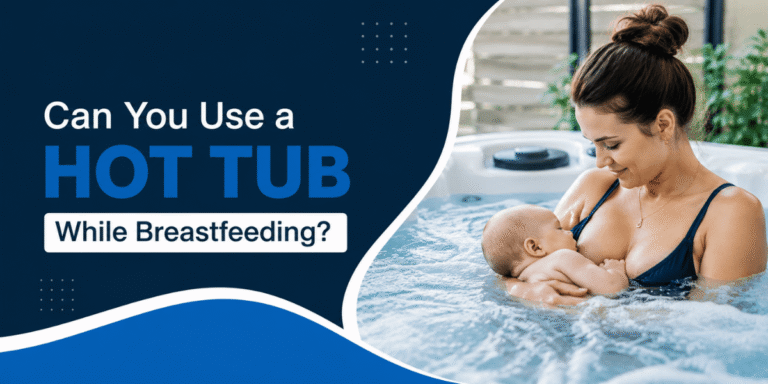
Between feeding a baby, recovering from delivery, and catching whatever rest you can, a quiet soak may sound tempting. If you’re planning to use a hot tub while breastfeeding, consider factors such as heat exposure, milk supply, water chemicals, and your postpartum recovery first.
Breastfeeding itself does not generally make hot-tub use unsafe. The bigger considerations are postpartum healing, overheating, hydration, and water hygiene. Anyone recovering after childbirth should follow their healthcare provider’s advice, especially after a C-section, significant tearing, stitches, or other complications.
What Happens When Breastfeeding and Hot Tubs Mix
Once your body has healed sufficiently, a hot tub can fit into your routine. The main considerations are postpartum recovery, your response to heat, and water cleanliness.
Breastfeeding does not create a special hot-tub restriction on its own. Milk production depends strongly on regular milk removal, so maintaining your usual nursing or pumping schedule matters more for supply than avoiding an occasional warm soak.
Body Temperature and Milk Production
Hot-tub water can raise body temperature, especially during longer or hotter sessions. This makes overheating a bigger concern than assuming heat directly changes breast milk production.
No established postpartum rule requires breastfeeding mothers to keep hot-tub water below a specific temperature. Avoid excessive heat and leave the tub if you feel dizzy, weak, nauseated, unusually tired, or uncomfortable.
Hydration Levels During a Soak
Hot water can increase sweating, so keep fluids nearby. Breastfeeding also increases fluid needs, making hydration an important part of postpartum care.
Rather than relying on a fixed amount of water, drink according to thirst and your healthcare provider’s advice. If you feel unusually thirsty, dizzy, weak, or unwell, leave the tub and cool down.
Relaxation and Breastfeeding
Warm water can feel soothing during postpartum recovery and may offer a relaxing break between breastfeeding sessions. Breast milk leaking is common and does not necessarily mean there is an issue with milk supply.
There is not enough evidence to say that hot-tub use directly changes milk production. Relaxing in warm water does not replace regular breastfeeding or pumping, which remain important for maintaining milk supply.
How Soon After Giving Birth Can You Use a Hot Tub?
Getting back to relaxing in warm water can sound appealing during postpartum recovery, but your body needs time to heal before full immersion is appropriate. The timing depends on your recovery, the type of delivery, and any complications or wounds that may need additional healing.
Postpartum care may include warm sitz baths to help ease discomfort. The American College of Obstetricians and Gynecologists (ACOG) recommends a sitz bath, which involves sitting in warm, shallow water, for relief from perineal pain and discomfort.
A hot tub is different from a shallow sitz bath because it involves deeper, prolonged immersion in heated water. That distinction matters during the postpartum period, when tissues may still be healing and individual recovery needs can vary. ACOG recommends individualized postpartum care and assessment of physical recovery after birth.
Before returning to a hot tub, talk with your obstetrician or other healthcare provider about your specific recovery. They can advise when full-body immersion is appropriate based on your delivery, healing progress, and any postpartum complications.
Vaginal Delivery Recovery
Healing after a vaginal birth depends on factors including tearing, an episiotomy, bleeding, soreness, and other complications. A warm sitz bath may help with perineal discomfort, but this does not automatically mean a hot tub is appropriate.
Follow your provider’s bathing instructions, especially if you have stitches or an area that has not fully healed.
Cesarean Delivery Recovery
A C-section involves abdominal surgery, so the incision needs careful attention during recovery. Some NHS guidance recommends avoiding swimming until a C-section wound has completely healed. This highlights the need for caution with hot-tub immersion during early recovery.
Before using a hot tub after a C-section, ask your healthcare provider to confirm that the incision has healed sufficiently for full immersion.
Signs Your Body Needs More Time
Hold off on hot-tub use if you have symptoms that could indicate a postpartum complication. Contact your healthcare provider about fever, worsening pain, unusual or foul-smelling discharge, heavy bleeding, or signs of infection around a C-section incision.
For C-section recovery, increasing redness, swelling, pain, drainage, or opening around the wound warrants medical attention.
Does Hot Tub Heat Affect Breast Milk Supply?
There is no good evidence that an occasional warm soak directly reduces breast milk production. Milk supply is influenced largely by regular milk removal through breastfeeding or pumping. Since hot water can increase sweating, stay hydrated during a soak. Maintaining your usual feeding or pumping routine can also help support milk production.
Milk supply can naturally fluctuate, especially during the early weeks after childbirth. A temporary change noticed after soaking does not necessarily mean heat caused it. If you have concerns about breastfeeding and hot tubs, speak with a healthcare provider or lactation professional for personalized guidance.
Benefits and Considerations of Hot Tub Use While Breastfeeding
A warm soak may provide a relaxing break during the postpartum period, but breastfeeding mothers should also consider heat exposure, hydration, healing, and water quality.
| Potential Benefit | What to Keep in Mind |
| Relaxation | Excessive heat can cause dizziness, weakness, or overheating. |
| Warm-water comfort | Warm water may ease some postpartum discomfort, but a hot tub is not the same as a sitz bath. |
| Quiet recovery time | Keep water temperature within safe limits and leave if you feel unwell. |
| A chance to unwind | Sweating can increase fluid loss, so keep water nearby and stay hydrated. |
| Personal self-care | Full immersion may need to wait until postpartum wounds or incisions have healed. |
| Clean-water relaxation | Poorly maintained hot tubs can spread germs, making proper disinfectant and pH levels essential. |
A comfortable soak starts with thoughtful hot tub use and a setup that works for your skin and lifestyle. If you want to learn more about protecting sensitive skin in a hot tub, check out our helpful guide before choosing your next spa. Then, browse quality hot tubs and spas at Colorado Springs Hot Tubs and find a relaxing addition to your everyday routine.
Practical Postpartum Hot Tub Safety Tips
Safe use after childbirth means allowing adequate healing, avoiding excessive heat, staying hydrated, and choosing clean, well-maintained water.
- Choose a comfortable temperature: Keep hot-tub water at or below 104°F (40°C), and avoid prolonged exposure to excessive heat, particularly while your body is still recovering after childbirth.
- Keep soaks brief: Start with shorter sessions and leave the tub immediately if you feel dizzy, weak, nauseated, lightheaded, or unusually overheated.
- Stay hydrated: Have water nearby and stay hydrated before and after soaking to replace fluids lost through perspiration.
- Shower afterward: Rinse off after using the tub as a simple hygiene measure, especially if you have sensitive or healing skin.
- Check water quality: Use a properly maintained tub with appropriate disinfectant and pH levels to reduce exposure to potentially harmful germs and bacteria.
- Wait for proper healing: Get your healthcare provider’s approval before full immersion, especially after a C-section, significant perineal injury, or other postpartum complications.
- Avoid using the tub alone: Have someone nearby during your soak, especially during early postpartum recovery, in case you become dizzy or need assistance getting out.
- Protect your feeding routine: Plan your soak around your baby’s feeding schedule so you can continue nursing or pumping regularly without unnecessary interruptions.
Frequently Asked Questions
-
Can Hot Tub Heat Decrease Or Increase Breast Milk Production?
An occasional warm soak can fit comfortably into a breastfeeding routine. Regular nursing or pumping helps maintain a consistent feeding pattern. If changes in milk supply persist, consult a healthcare professional or lactation specialist for guidance.
-
Is There A Risk Of Bacterial Infection From Hot Tub Water While Nursing?
Poorly maintained hot tubs can contain germs that cause skin, respiratory, or gastrointestinal illnesses. When using a hot tub while breastfeeding, proper disinfectant levels, balanced pH, and routine maintenance can help reduce these risks.
-
How Soon After Childbirth Is It Safe To Get Into A Hot Tub?
There is no universal timetable for hot-tub use after childbirth. Ask your healthcare provider once you have healed sufficiently, especially after a C-section, significant tearing, stitches, or other complications.
-
Do Hot Tub Chemicals Transfer Into Breast Milk?
There is not enough evidence to make a broad claim about meaningful transfer of normal hot-tub chemical exposure into breast milk. Showering after a soak is a simple hygiene step before handling or nursing your baby.
-
How Should A Nursing Mother Stay Hydrated While Using A Hot Tub?
Keep water nearby, drink when you’re thirsty, and leave the tub if you feel dizzy, weak, unusually thirsty, or overheated. Continue your normal breastfeeding or pumping routine.
Closing Summary
Warm water and breastfeeding can fit into the same routine with sensible precautions. Postpartum hot tub safety means waiting until your body has healed sufficiently, avoiding excessive heat, staying hydrated, and using clean, properly maintained water.
No universal hot-tub rule applies to every postpartum mother. Your delivery, healing progress, symptoms, and healthcare provider’s advice matter more than following a fixed guideline.
Postpartum recovery calls for thoughtful hot tub habits, and understanding how long you should stay in a hot tub can help you make safer, more informed choices. For more guidance, read our detailed guide before planning your next soak.
When you’re ready to create a comfortable space at home, explore quality hot tubs and spas at Colorado Springs Hot Tubs and find an option that suits your relaxation routine.